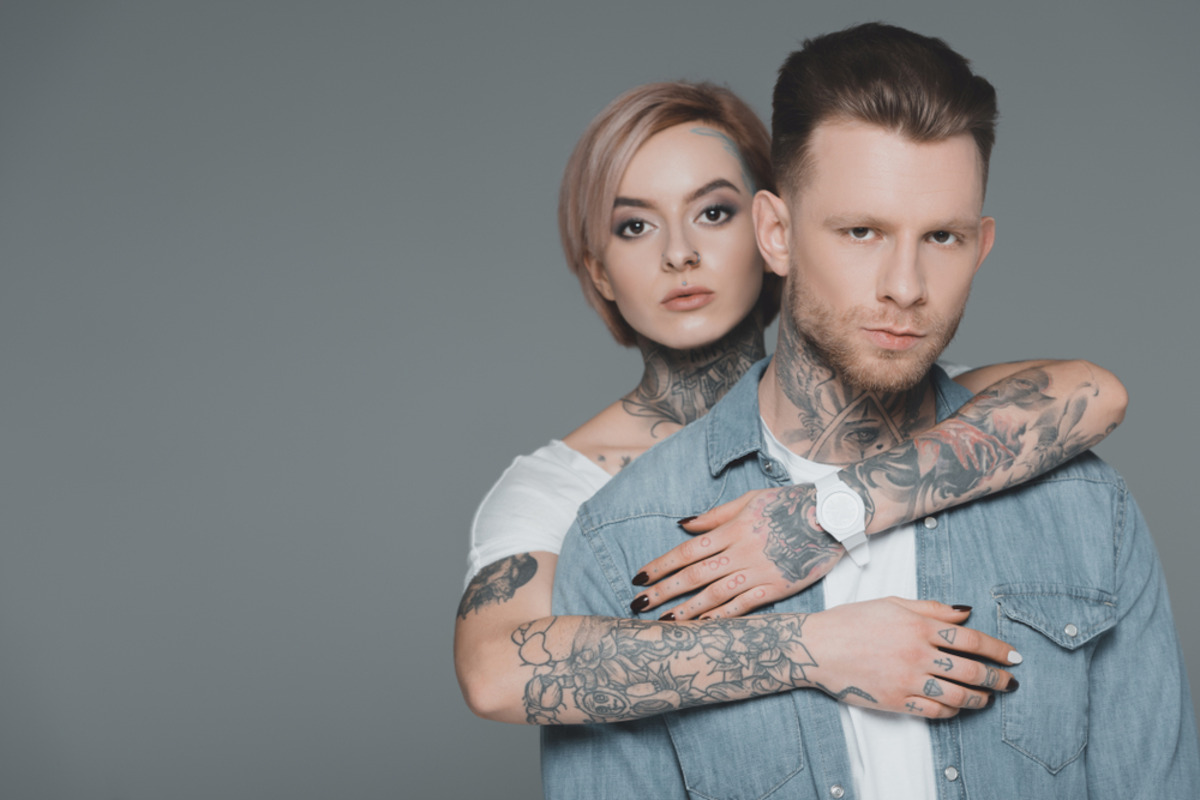
It is one of the most quietly searched questions online, but very few people talk about it honestly: Do tattoos make people more attractive?
The answer is surprisingly complex — but statistically and socially speaking, tattoos absolutely can influence perceived attractiveness. Whether that influence is positive or negative depends on confidence, execution, placement, personality, social environment, and overall presentation.
As both a tattoo artist and a doctor who works around professionals daily, I’ve watched society’s perception of tattoos evolve dramatically over the last decade. What used to be viewed almost exclusively as rebellious has now become intertwined with fashion, identity, confidence, fitness culture, art, and self-expression.
Today, tattoos are often associated with individuality, boldness, creativity, and confidence — all traits many people naturally find attractive.
The Psychology Behind Tattoo Attraction
From a psychological and sociological perspective, tattoos often communicate something deeper than just visual appearance.
Tattoos can subconsciously signal confidence, commitment, pain tolerance, creativity, independence, identity, and social boldness. Researchers in evolutionary psychology have even discussed tattoos as “costly signals,” meaning they represent permanence, pain tolerance, and commitment.
In simple terms, people often perceive tattoos as evidence that someone is comfortable with themselves and willing to stand out socially.
What Research Says About Tattoos and Attraction
Studies examining tattoos and attraction consistently show that tattooed individuals are often perceived differently than non-tattooed individuals.
Tattooed men are frequently viewed as more masculine, adventurous, dominant, and physically tougher. Some research suggests tattoos can increase short-term attraction because they signal confidence and individuality.
Tattooed women are commonly perceived as expressive, artistic, independent, socially outgoing, and confident. Social media and modern culture have normalized tattooed women dramatically compared to previous generations.
What Tattoos Women Commonly Find Attractive on Men
Women often respond positively to tattoos that feel intentional, cohesive, and professionally executed.
Popular placements include sleeves, forearm tattoos, chest pieces, and black and grey realism work that complements anatomy and physique.
Women also tend to appreciate tattoos that feel meaningful or artistic rather than random. Confidence, cleanliness, fitness, and overall presentation usually matter far more than simply “having tattoos.”
What Tattoos Men Commonly Find Attractive on Women
For women, tattoos commonly viewed as attractive often emphasize elegance, body flow, femininity, and artistic detail.
Popular placements include the ribs, spine, sternum, shoulder, collarbone, thighs, and forearms. Fine-line work, florals, ornamental tattoos, blackwork, and cohesive compositions remain extremely popular.
At the same time, modern tattoo culture has increasingly embraced heavily tattooed women as socially attractive as well, including full sleeves and large-scale body compositions.
Confidence Is the Real Attraction Factor
The biggest factor many people overlook is confidence.
Tattoos themselves are not magically attractive. What tattoos often do is amplify identity and self-expression. People who wear tattoos confidently often present themselves differently socially, emotionally, and physically.
That confidence changes how others perceive them. Tattoos become part of the person’s energy, style, and individuality rather than just decoration.
Bad Tattoos Can Create the Opposite Effect
Execution matters tremendously.
There is a major difference between professionally designed cohesive tattoos and impulsive, poorly executed work. People subconsciously judge tattoo quality whether they realize it or not.
Well-executed tattoos are often perceived as artistic and intentional, while poor-quality tattoos can create impressions of carelessness or impulsivity.
Generational Shifts Are Changing Tattoo Culture
Millennials and Gen Z grew up surrounded by tattooed athletes, musicians, entrepreneurs, healthcare providers, influencers, and executives.
Because of that, tattoos have become deeply integrated into mainstream culture. The old stereotype that tattoos are only associated with rebellion is disappearing rapidly as tattooed professionals become increasingly common across all industries.
Final Thoughts
So, do tattoos make you hotter?
For many people, yes — absolutely. But tattoos themselves are only part of the equation.
The real attraction often comes from confidence, authenticity, artistic taste, individuality, and self-expression. A well-executed tattoo worn confidently can absolutely enhance attractiveness both socially and physically.
At the end of the day, tattoos are storytelling — and humans have always been attracted to compelling stories.